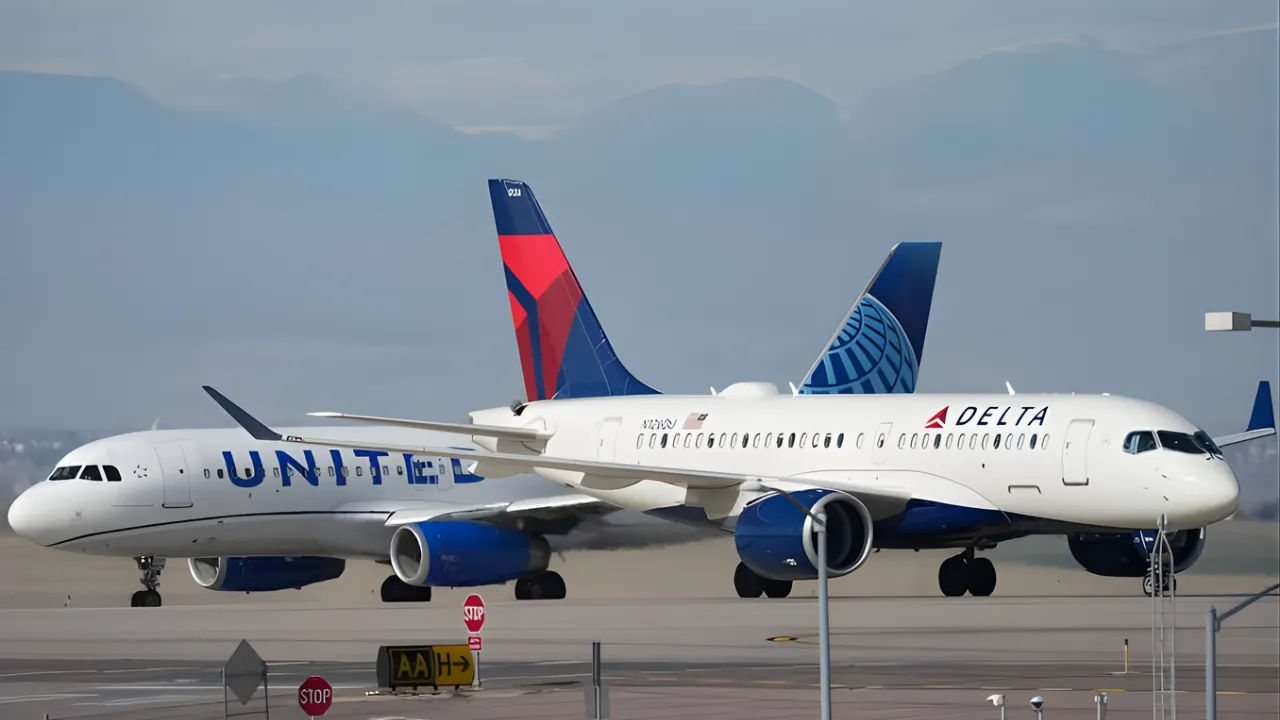
FAA ground stop today : Thousands of additional flights were canceled Saturday as airlines struggled to recover from a nationwide Federal Aviation Administration ground stop that halted departures for more than four hours on Friday.
Officials said aging air-traffic-control routers became overloaded by new technology, producing inconsistent data and creating safety concerns that forced the FAA to stop flights across the country.
A Rare Nationwide Shutdown
The FAA issued the nationwide ground stop Friday afternoon after air-traffic-control communications and radar systems experienced problems.
The agency cited “extraordinary circumstances and for reasons of safety,” stopping departures at airports across the country and disrupting travel from coast to coast.
The restriction lasted more than four hours before the FAA lifted it at 8:15 p.m. Eastern time Friday. Although flights were allowed to resume, the damage to airline schedules carried into Saturday, leaving travelers facing cancellations, long delays, crowded airports, and uncertain rebooking options.
What Officials Say Went Wrong
Transportation Secretary Sean Duffy said the problem began when new technology added to the air-traffic-control system overloaded older routers and switches.
According to officials, the equipment began producing inconsistent data, creating gaps in radar and communications that made it unsafe to continue normal flight operations.
“Our routers actually got overloaded with data,” Duffy said, explaining that the system then began giving inconsistent readings. He said the FAA shut the system down because of those inconsistencies, rather than risk continued operations while controllers could not rely on accurate information.
Officials described the affected network as outdated, saying it relies on older switches, routers, and copper-line infrastructure. Preliminary reporting pointed to Cisco 600-series routers built between 2001 and 2006, although the investigation remained ongoing.
Thousands of Flights Affected
The disruption quickly became one of the largest air-travel shutdowns in decades. More than 15,000 flights were delayed or canceled on Friday, according to FlightAware data cited by CNN.
By Saturday morning, the impact was still growing. FlightAware reported 3,374 canceled flights and 1,008 delayed flights nationwide by 6 a.m. Eastern time. Later in the morning, the total had risen to more than 3,600 cancellations and more than 1,800 delays.
Across Friday and Saturday, more than 12,500 flights had been canceled by midday, with officials warning that the number could continue rising as airlines worked through backed-up schedules.
Travelers Face a Difficult Weekend
The ground stop stranded passengers at airports nationwide and forced airlines to rearrange crews, aircraft, and flight schedules. Because a nationwide stop affects so many routes at once, recovery is not immediate; aircraft and crews may be in the wrong cities, and available departure slots can fill quickly once operations restart.
Major airports reported significant local effects. In Chicago, for example, more than 400 flights were canceled at O’Hare and Midway by Saturday morning, with 376 cancellations at O’Hare and 54 at Midway as of early morning.
Travelers were advised to check airline apps and airport updates before heading to terminals. Even passengers whose flights were not directly canceled could face delays because aircraft, crews, and air-traffic slots were being reshuffled after the shutdown.
No Sign of a Cyberattack
Federal officials said there was no indication that the outage was caused by a cyberattack. Instead, the preliminary explanation centered on a compatibility and capacity problem: newer systems generating more data than older communications equipment could reliably handle.
That explanation has renewed attention on the condition of the nation’s air-traffic-control infrastructure. Officials said the failure showed why modernization funding is needed, with Duffy calling for billions of dollars in additional investment to replace aging equipment.
Airlines Begin Recovery
Airlines resumed flights after the ground stop was lifted, but the recovery process was slow. Carriers had to rebuild flight sequences, reposition aircraft, reassign crews, and manage passengers whose original itineraries were disrupted.
Some airlines reported progress restoring service on the West Coast, while other airports continued to deal with cancellations and delays well into Saturday. The scale of the disruption meant that even after the technical issue was addressed, passengers could feel the effects for days.
A Warning About Aging Systems
The incident has raised broader questions about whether the country’s aviation system can handle modern data demands. Officials said the problem was not simply one failed device, but a larger weakness in a legacy network that became overwhelmed during an upgrade process.
Also read this : Boise sate college GameDay – Broncos Fans Brave Freezing Cold as Football Tradition Brings Generations Together
For travelers, the immediate concern is practical: getting to their destination. For policymakers and aviation leaders, the concern is longer term: preventing a similar failure from happening again.